Your colors, read from one selfie — in 40 seconds
Take a selfie in daylight. We read the actual color of your skin, eyes and hair, then tell you which shades light you up — and which wash you out.
Online color analysis from one selfie — find the shades that suit you
The same face can look bright in one color and tired in another. That difference is not a fashion rule or a guess: it comes from the relationship between a shade and the natural color of your skin, eyes and hair. Muar reads those colors from the pixels of one daylight selfie and turns them into a practical palette. Your first verdict takes about 40 seconds and is free.
What a color season actually describes
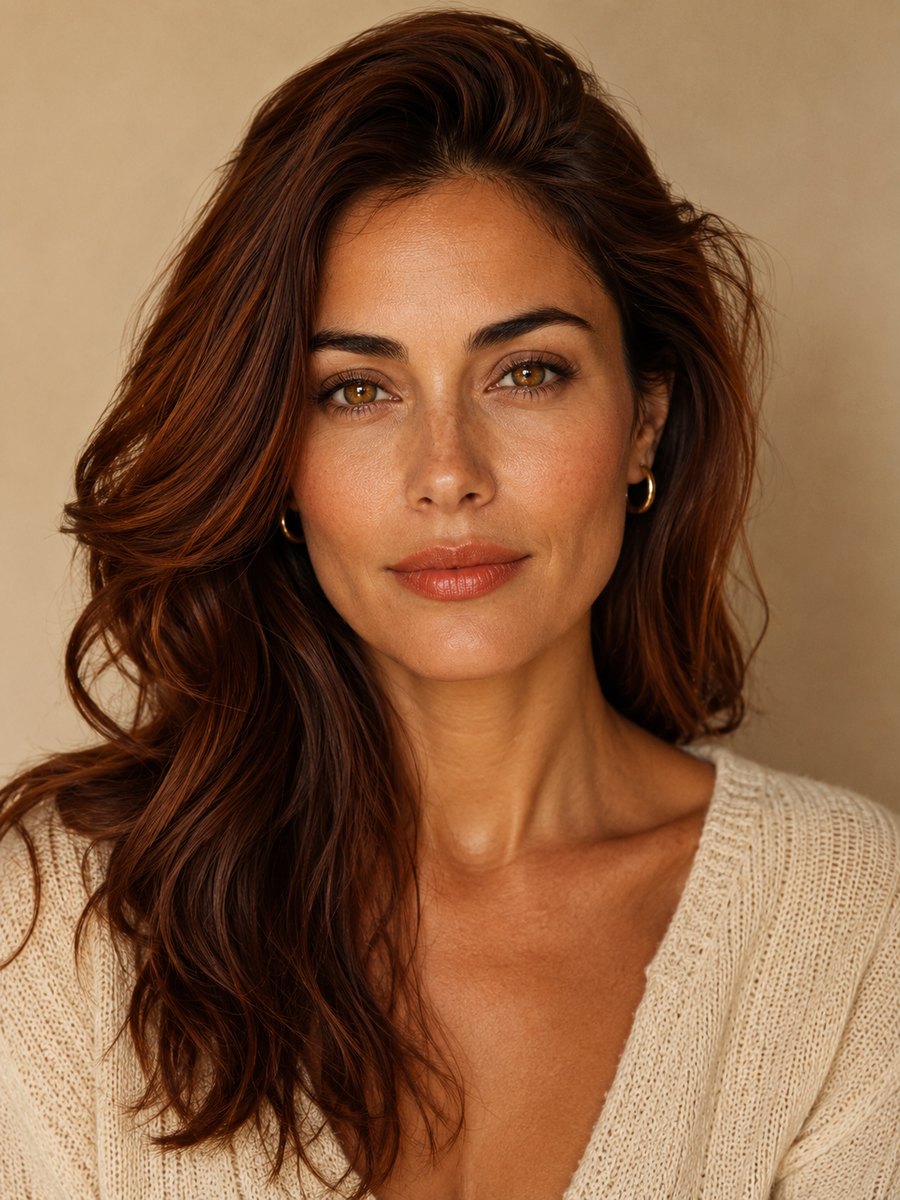
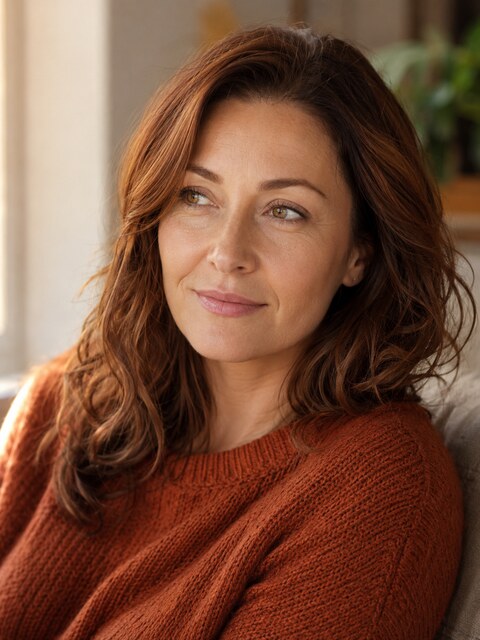
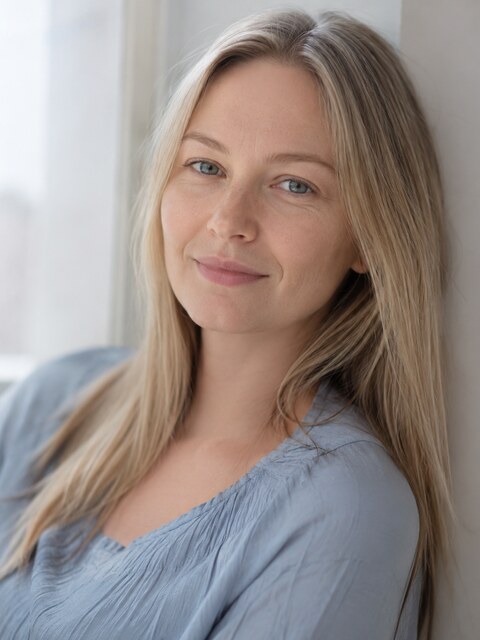
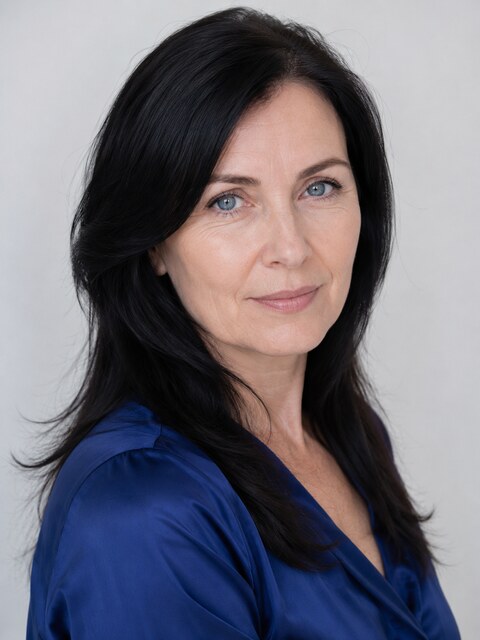
A color season is a short name for three visible characteristics: temperature (warm, cool or neutral), depth (light or deep) and contrast (how strongly your face, hair and brows differ from one another). The familiar names — Spring, Summer, Autumn and Winter — are labels for combinations of those characteristics, not personality types.
That is why a rule such as “Winter wears black” is too vague to be useful. A cool graphite and a warm espresso are both dark, but they behave very differently next to the face. The useful answer is not a season name alone; it is the exact family of shades, values and contrasts that supports your features.
How color analysis from a photo works
Take a front-facing selfie near a window, without a filter and without strong colored light. The app places points on the cheek, iris and hair roots. You can review and move every point before the result is calculated, so a shadow or a strand of hair does not silently become your skin color.
The color calculation runs in your browser. It compares the sampled values and produces your temperature, depth and contrast, then builds the first group of shades that work near your face. The photo is not stored in Muar’s application database; separate hairstyle try-on uses an image only after your explicit action. The privacy policy explains the analytics and storage details.
- Use daylight and face the window rather than standing with the window behind you.
- Remove filters and avoid strongly tinted makeup for the first measurement.
- Check the three sampling points before you confirm the result.
Warm, cool or neutral undertone
Undertone is the temperature beneath the surface color of the skin. Warm undertones are often supported by caramel, copper and warm ivory; cool undertones tend to work with silver, blue-reds and greys without yellow. Neutral undertones can use both temperatures, so clarity, depth and contrast become more important.
Veins at the wrist and the “white versus ivory shirt” test can offer a clue, but room light changes what the eye sees. Sampling the actual image gives you a consistent starting point and makes it easier to compare shades instead of relying on memory.
What you can do with the result
Knowing your palette does not mean replacing your wardrobe. It means making the next purchase with a clearer question: not only “is this color beautiful?”, but “does this color help my face?”. Start with the area closest to the face — tops, scarves, lipstick, glasses and hair color — and keep the rest of the wardrobe flexible.
- identify your useful black, white, denim and neutral shades;
- choose lipstick, blush and metal tones with less trial and error;
- recognize colors that create shadows or make the complexion look grey;
- check a garment in the fitting room before paying for it.
How accurate is a photo-based result?
The measurement uses real pixels, but the camera can only record the light that reaches it. Daylight and a clear, unfiltered image improve consistency; yellow bulbs, strong shadows and beauty filters can shift the result. Treat the palette as a practical comparison tool, not an irreversible verdict. The final check is always how the shade looks on you in real life.
Use the same photo for your next decision
You can also compare hairstyles on your own face, including wedding styles, before you book a salon appointment.
Common questions
Can I find my color season online for free?
Yes. Upload one daylight selfie and review the three sampling points. The free verdict shows your undertone, depth, contrast and first recommended shades in about 40 seconds, with no sign-up.
What is included in the full analysis?
The free verdict gives you the direction. The full analysis ($50, one payment) adds a palette of more than 30 shades with color codes, an anti-palette, lipstick and blush directions, gold-versus-silver guidance, outfit ideas and unlimited garment checks in the fitting tool.
Does Muar store my color-analysis selfie?
The color calculation runs on your device and the selfie is not stored in Muar’s application database. Hairstyle generation is a separate action with separate image handling. Full analytics and storage details are in the privacy policy.
Do I need makeup-free skin?
A natural face gives the cleanest first reading. Light everyday makeup is usually workable, but a strong foundation, colored contact lenses, a beauty filter or colored lighting can move the sampled values.
Is this a subscription?
No. The first verdict is free. The full analysis is a one-time payment with no automatic renewal, and the refund terms are stated before payment.